|
24th January 2008 marks the 60th anniversary of the arrival of the Cabrini Sisters in Australia to take over St Benedicts Hospital, which had previously been run by the Sisters of Mercy Melbourne.
Making the necessary travel arrangements took far longer than intended. The end of the war had left many thousands of Australian servicemen and their families in Britain and Europe who, together with other displaced persons, required transport to distant countries. They were unable to gain passage on a ship, and resorted to chartering a plane. The flight took ten days. The diary excerpts below give an insight into their journey
14 January 1948
We left the house in Rome for Ciampino airport at 5.15 am accompanied by Mother Gabriella Baglione and Mother Gesuina Della Casa. We boarded the plane and waved our handkerchiefs at these sisters until they disappeared ... We remained silent. Words cannot describe what each one of us felt inside
We were flying so high... How wonderful to soar into the sky, it was the first flight for all of us. We could see small towns, houses, farms, fences etc. magnificent!... As we admire the beautiful view, the Italian coastline disappears. Even though it may have disappeared from our eyes, it will never be erased from our heart..
At 1.30pm, after only one hours flying we arrived in Greece
As soon as we landed, our thoughts turned to our Mother General and we sent her a telegram to reassure her. We were to have left Greece immediately but because of bad weather we had to spend the night at the Hotel Lido, owned by a good Italian man originally from Florence who looked after us very well.
15 January 1948
In the morning ... we left Athens at 8.15am. Seven other passengers got on who had no right to be there because the whole plane was especially for us. The remonstrations by the Captain were to no avail. He had to give in. We got to Cyprus at 11.30am. It seemed like summer, very hot: a beautiful island but very poor. Again from Cyprus we sent another telegram to our Rev Mother. After a quick and meagre meal we left Cyprus at 1.00 pm. We flew over the Syrian Desert. Not one blade of grass, only sand and more sand. ...
We flew into the capital of Iraq, Baghdad, we landed at 6.30 pm. The Captain did his best to find us accommodation at a convent and he succeeded. We were guests of the Presentation Sisters, who welcomed us and offered us their kind hospitality. In the morning...after thanking [the sisters] for their kindness, because we were total strangers to them, we got on the bus which travelled across the city...
16 January 1948
We left Baghdad at 8.30am and flew towards Arabia. Still sand everywhere but with a great number of oil wells. Our good Captain flew at low altitude over the Arabian Gulf. It is truly marvellous! ...
We arrived in Bahrain at 12.30pm. The heat was fierce
We were welcomed, very kindly, by the English Consular representative. He organised a place for us to spend the night at the airport. He sent the soldiers to sleep elsewhere. There are no hotels or convents. He did his best to mask the filth by having sheets placed on the ground like carpets. On the beds, some of us had sheets, others didnt, but in spite of this we were happy. Two Arabs heated up water for us, just outside the door; they worked all night, they heated the water over a fire and they poured it into a pipe which brought it into our living quarters. So much kindness! Even here, after much difficulty, we were able to send a telegram to our Rev. Mother General.
17 January 1948
We left Bahrain for Karachi (Pakistan) at 7.00 am; we were still flying over sand, so many oil wells. Every now and then a slice of green which contrasted with the gold of the sand. We saw caravans of camels, they looked like the Magi going to the crib to see Baby Jesus. We got to Karachi at 4.00pm. After we sent a telegram to our Rev Mother General, we were guests of the Sisters of St Joseph who welcomed us with great kindness which we will always remember. Karachi is beautiful and modern. The Franciscan Fathers have a splendid church in the centre of the city.
18 January 1948
After mass, our Sisters served us an excellent breakfast, we thank them sincerely for their wonderful hospitality. We left Karachi at 9.40 am with our nostrils full of sand
We are flying towards Calcutta, the plane lands in Gwalior (India) at 2.30 pm to refuel. We were in the countryside, the heat was stifling. We couldnt even send a word to our Rev. Mother General. We saw a lot of banana and coconut plantations. The inhabitants of Gwalior are half naked, they live on game and tropical fruit... We left Gwalior at 3.20 pm and arrived in Calcutta at 7.30 pm. We went into the airport, very beautiful and modern, but chaotic. Paper litter, people running, lots of noise etc. enough to frighten anyone... We asked a young officer to please help us deal with the visa requirements; he turned out to be a real guardian angel. He got through it all in no time, a real blessing for us...
We stayed with the Reverend Sisters of St Joseph, the same order as Karachi. What can you say about Calcutta? We were rather tired and we would have liked to rest before continuing our journey, but how could we? Mother Candida was given their Mother Generals room, very clean and well appointed but full of cockroaches, most of the other sisters had the same visitors.
After we said goodbye and thanked the good Sisters for their hospitality, we got onto a large bus to go to the airport. Along the road people were still sleeping; it was 4.30 am only the journalists were up and about getting newspapers from the printers. Whole families sleep under the trees [or] on the ground in these shanties and when its rains they cant even move how distressing! as soon as the sun rises [they] come out to stretch their aching limbs and have a rest on the ground, out in the open air, as long as it doesnt rain. The luckier ones have houses but these dont have any doors, therefore if you go by you can see everything that goes on inside. In one of them, in a corner of the room we could see a straw mattress on which they slept, in another corner others were eating, in the centre of the room some were dancing and singing, cooking etc children, goats, sheep, dogs and cats went in and out as they pleased.
19 January 1948
We left Calcutta for Rangoon at 9.10 am. No more over the sand, we flew over the sea, over the Bay of Bengal; we got to Rangoon (Burma) at 7.30 pm to lush vegetation in contrast to the tracts of sand we left behind, we could see many pagodas. They took us to the Sisters of the Good Shepherd who welcomed us with such warmth we felt at home. We let Rev. Mother General know that our trip was proceeding well. The Sisters had been waiting two months for us. Monsignor Fox of Melbourne had kept them up to date about our trip and he sent Father Fisher to meet us at the airport.
20 January 1948
On the morning of the 20th January we heard mass celebrated by Father Fisher at 4 am. After Mass and Communion the Sisters prepared a big breakfast for us. We shall never forget them. We left Rangoon
at 6.30 am.
We were getting close to the halfway point of our long trip. The Captain told us we were flying over Siam where the rivers are rich with alluvial gold... We landed in Penang to refuel at 12.40 pm. Banana trees, other tropical plants whose names we didnt know - the heat was fierce. Very quickly we were surrounded by a large number of children. They looked at us and smiled, showing us their white teeth. Clothes? They didnt wear any, they were scantily covered with white, black or multicoloured cloth. We gave them some sweets; the more we gave out, the more children appeared, from where we do not know. We were ready to leave, we hoped we didnt have to walk through grass taller than ourselves and full of venomous snakes. A truck arrived in time and took us to the plane. Along the road, the fathers and families of those nice children peered from the tall, thick grass to say goodbye and smile at us... We left Penang at 2.00 pm bound for Singapore. The tropical heat took its toll, but we were happy that our destination was getting closer.
We landed in Singapore at 3.45 pm where we were welcomed by the Sisters of the Child Jesus. In this convent we found two sisters from Bergamo [in Italy]; they were a great help to us. They prepared a much-needed nice meal for us, we were a bit tired and thirsty because of the great heat. After we sent a telegram to our Rev Mother General and said our prayers in the open air, it was impossible to stay in the church for the stifling heat, we went to bed
Mosquitos were doing their best to disrupt our sleep, as were the noises and songs of the neighbours, but they didnt get the better of us we all slept very well.
21 January 1948
We got up at 2.30 am, heard mass and, strengthened by Holy Communion, we were ready to leave. We said goodbye and thanked our sisters from Bergamo for their kindness. We got to the airport and found the Captain and the pilots very annoyed because they didnt want to take the seven Greek passengers on board; it was a long crossing, the plane was small and they were afraid of something going wrong. They managed to leave five.
It was 8.30 am when we left Singapore. It was a long crossing and the heat made it more arduous. We flew over the city of Baravia and over part of the Philippine Islands... then we flew over the city of Java and landed on the Island of Timor at 1.20 pm; the people were very kind, clean, there were flowers everywhere and the heat didnt let up; there are no seasons, it is one continuous tropical season. We were guests of the Sisters of the Child Jesus, they all spoke Dutch, only one could talk to us because she spoke English. These kind sisters together with three other congregations were evacuated from their land and convents during the war when the Japanese invaded the Dutch East Indies. These poor sisters pray and hope to return to their convents and reopen their schools... After Holy Mass and Communion and having sent another telegram to our Mother General
we left Timor Surabaya at 7.40 am bound this time for Darwin, our destination.
22 January 1948
We flew towards Australia. The Dutch East Indies are very beautiful, the vegetation and scenery are enchanting. We are finally flying over the Indian Ocean and we are near to the Australian mainland. We land in Darwin, it is 4.00 pm. After the arrival formalities we sent a telegram to our Reverend Mother General. Then we were taken to the Sisters of the Sacred Heart. Two priests, sent by Monsignor Fox in Melbourne, came to welcome us and congratulate us on our arrival and entry into Australia after such a long trip. The reception by these sisters will forever live in our memories, the way in which they took care of us was beyond all expectations. The sisters had been expecting us since Christmas, the refectory was still in readiness for our arrival; there was a big banner in the middle of the room tastefully decorated with the words Welcome to Australia in blue and white. Feeling revived after a good meal we went to the Chapel for prayers; we felt at home. A large dormitory with comfortable beds and nets to protect us from those annoying mosquitoes was waiting for our tired limbs, but how could we sleep? We were happy to be in Australia, near our mission.
23 January 1948
After Holy Mass and Communion and a good breakfast ... the sisters took us to see the Parish Church, pockmarked by Japenese bombs, then they took us to the airport. We were sorry to leave them but we shall never forget them in our prayers. It was right here in Darwin that our mother Superior, Mother Candida Antonietti, dreamed of our Holy Founding Mother. She saw her (in a dream?) near the sea picking up small pebbles and placing them on top of a leaf (a water lily) which she was holding in her hand. Mother Candida, seeing her bent over, not knowing or being able to see who the sister was and what she was doing, asked her: What are your doing Mother? and when the sister turned around Mother Candida was privileged to recognise our Holy Mother. Mother, what are you doing? and she, smiling, replied, Ive been waiting for you; But Mother what are you doing? Mother Candida repeated. As she came closer to our Saint she saw the pebbles in her hands. What are you doing with those stones, Mother? These pebbles must change into small pearls. How Mother? By humility. Come with us Mother. I am always with you, but as she was speaking our Holy Mother disappeared. Our Mother Superior awoke with great joy because our Holy Mother had promised and assured her that she would always be with us. She was there waiting for us.
We left Darwin at 8.30 am and flew to Cloncurry. From the plane we could see many fertile fields, forests such heat that made you drift off to sleep. We arrived in Cloncurry at 12 pm. We sent the usual telegram to our Rev. Mother General as we had promised we would do at each stop. Cloncurry is a brand new town, in the middle of the countryside, still developing. After lunch we left Cloncurry at 12.30 pm and flew to Charleville landing at 2.00 pm. This town is also just starting out, houses made of wood in the middle of nowhere but very promising, much activity, construction going on, roads.
We were guests of the good Sisters of Mercy. The parish priest of Charleville, having been advised of our arrival by Monsignor Fox of Melbourne, did everything he could for us; he was waiting at the airport and took us to the convent. It was empty, the good sisters were on holidays and therefore we had the convent all to ourselves. The mothers of these sisters waited on us, brought us food, fruit, tea, coffee and the parish priest was able to get some good milk for us to drink before going to bed. The extreme heat made us drink to excess, not a single bottle of drink was left in the ice box, only food... Another telegram to our Mother General, in the hope that each one would find her a little better.
24 January 1948
After Holy Mass and strengthened by Communion we left Charleville at 8.40 am and flew towards Sydney. We were happy because that night we would be sleeping in our own convent... As we were flying the sky became cloudy and a big storm broke, it was so strong that for an hour we were extremely anxious and terrified. The pilot lost radio contact and for quite a while he did not know which way he was flying. We could see them running around closing doors etc. and we felt as if we were suffocating from lack of oxygen. We worked out that something was wrong and we prayed even more fervently... At 2 pm of that memorable 24th January we landed in Sydney. The Sisters of the Good Shepherd were waiting for us, they took us to lunch in the terminal. We must thank with all our heart Dr Mannix and Monsignor Fox who were more than guardians to us. With their telegrams from Athens to Melbourne we were welcomed like princesses each time we stopped. The Sisters of the Good Shepherd presented two beautiful bouquets of tropical flowers, one to Mother Candida and one to Mother Bernardina, which they were pleased to accept... At 4 pm, having sent the second last telegram to our Rev. Mother we left Sydney for our longed-for destination, taking with us flowers, cakes and tropical fruit given to us by the Sisters in Darwin and Sydney. We were tired of so much attention, we would have liked to hide but there was one more welcome to go and then off to the peace and quiet of our convent.
We arrived in Melbourne at 6.00 pm, the sun was still high in the sky and it was very hot. Monsignor Fox and another priest were waiting for us as was Mrs Santo Spirito and the newly-ordained Jesuit, Ferrucci. Many travellers stopped solely out of curiosity. We were made to put our bags in the middle of the road in order to have a photograph taken with the Captain and the pilots. We thanked the Captain and his staff profusely for the good care they took of us, their kindness and the telegrams they sent to the Reverend Mother General; without their help in many countries it would not have been possible.
We went to the Archbishops office to pay our respects to Dr Mannix who was waiting for us... in the Cathedral gardens, where he congratulated us and insisted on having a photo taken with us. We presented him with the precious reliquary of our Holy Founding Mother, a gift from our Reverend Mother General. He was very grateful for the gift and took it to his private chapel. After the reception, photographs etc we were taken to our long awaited mission.
We arrived at St Benedicts Hospital at 6.30 pm. We were welcomed by many Sisters of Mercy who were running the above hospital. We went into the chapel to thank Jesus for the success of our trip and for the overwhelming kindness afforded to us during this long but pleasant journey. Our Mother Superior and Mother Bernadina placed their bouquets at the feet of the Sacred Heart and Our Lady. The sisters took us to the refectory for a convivial meal which we enjoyed even though we were extremely tired. After a short break we went into the chapel for prayers and finally to our rooms.
Founding the Cabrini Organisation in Australia
This year marks the 60th Anniversary of Cabrini Health and it will be a year of remembrance and celebration for the multitudes of people who helped shape the organisation.
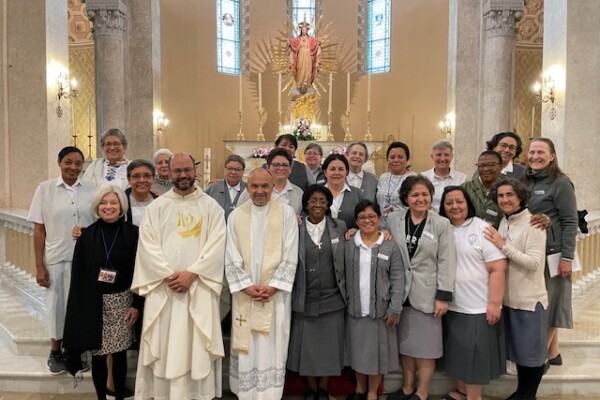
1948 heralded the arrival in Australia of ten Missionary Sisters of the Sacred Heart of Jesus. At the invitation of the local bishop, and following an arduous ten-day journey by air, the Sisters who were mostly Italian with little or no English, took over the ownership of St. Benedicts, a once-grand home converted to a hospital in the 1920s.
Mother Bernadina Claudi, the Sister appointed as Matron, saw the hospital for the first time on 29 January. An extract from her Memorie records:
On the first floor there were seven elderly patients, chronically ill, one of whom died the very evening we arrived. Another patient, an old Jesuit priest, who had been laying there for months with a broken leg.died a few days after we arrived. The Sisters implored us to open the hospital, admit patients and start surgery. Mother Bernadina held firm and she was right. How could we operate in a theatre which was missing almost everything? It had a table, a reasonable light, eight enamel basins, old and rusty; a number of kidney dishes also rusty and leaking. No surgical dressing, no antiseptic, medicines etc, nor any other basic necessity that one would find in even a mediocre operating theatre. First we needed to organise, buy, prepare and then open and give the doctors at least an indication that our work was of a reasonable standard.
The hospital rooms, the wards, were not equipped any better a bed, with springs which gave you backache, because they were all broken, a chair, a side table, a locker. Some had a wardrobe, others didnt. What about linen? After the beds were all made there was only a dozen spare sheets, a few pillow cases and a few towels. Before admitting patients we needed to buy at least the basics. What about bedpans and urinals? Only a few and these rusty and full of holes. What about the kitchen? This was no better than the other areas. A few pans which leaked, the plates, glasses etc. were not even enough for the six patients we had.
We found that there were six nurses to assist the six patients, five during the day and one at night. Three girls in the kitchen, one in the laundry, one to do the cleaning and a gardener. Twelve staff for six patients. The staff was not too happy that we had come. They kept an eye on us, they followed our every move. The building was not in good condition, when it rained we had to run around with buckets to catch the water leaking fro the roof.... In one four-bed ward, in place of windows there were heavy curtains, so wind, sun, cold and heat did nothing for the comfort of the patients.
We had left our Rev. Mother General on her deathbed, how could we write to her and explain everything without increasing her anxiety? ... So without losing spirit, all of us worked hard to make the place presentable. Some of us painted the beds, chairs etc., others washed the walls, the kitchen, the linen etc. With funds raised from raffles (and did we have a few of those!) and Divine Providence which is ever present, we were able to furnish, modernise, paint our little hospital and were able to open to the public by mid-February.
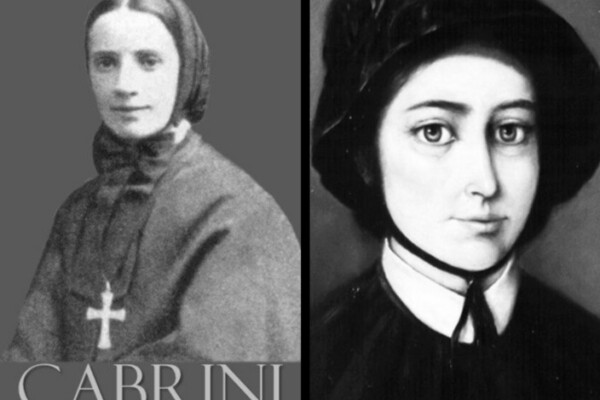
Despite their despondency over the shabbiness of the building and the myriad of problems they faced, the Sisters were heartened by the missionary zeal of their Founder, Mother Cabrini. They worked hard to establish a facility that would become noted for the high standard of patient care. So successful were they that by 1958 a larger hospital to be known as Saint Frances Xavier Cabrini Hospital - was built adjacent to the old building. The hard work continued by all at Cabrini and as we entered the 21st Century, a new name Cabrini Health better described the expansion of services to include not only acute care, but rehabilitation and residential care as well.
Over the years the Sisters respected reputation, and that of the hospital, attracted staff from a wide cross-section of the community. All became committed to the spirit and vision of these missionary women. With the visible presence of the Sisters declining year-by-year, responsibility for carrying the Cabrini spirit forward is increasingly resting with the staff.
Today, we have identified those responsibilities to be direct care, a culture of service, building the Cabrini community and environmental stewardship.
No matter how large or complex the organisation, essentially, through the provision of health care, it has remained faithful to the vision of Mother Cabrini. That vision includes fostering a partnership amongst employees based on Christian Gospel values; by serving the marginalised in the community both in Australia and overseas, and by maintaining strong links with the worldwide Cabrinian family.
Submitted by Catherine Garner, Director of Mission Integration & Jackie Meiers, Public Relations Manager Cabrini Health Australia.
Please visit the Cabrini Health website
|